
4 factors that actually shape the price
A business owner Googles "how much does a website cost." They get 200 studios and 200 prices that differ by 30×. The reason is simple — none of those vendors were taught to break a quote into line items. Everyone gives one number and asks you to send a spec.
The actual cost comes from four things:
- How many pages and how custom each one is. 5 simple pages ≠ 5 custom ones with calculators.
- How many integrations. Helsi, AmoCRM, Stripe, e-signature, WhatsApp bridge — each is 4-12 hours of work plus testing.
- Who writes the content. If the client does — we save £1,500-£2,500 on a copywriter. If we do — that's an added line.
- How many languages. Each language doubles the SEO structure + CMS config + adds 15-25% to scope.
Design matters less than people think. Design complexity shifts the price by 0-40%, not by multiples. Most of the tier is engineering and integrations.
What "on request" hides in a quote
Of our 47 clients, 40 came to us after another studio refused to give a number. The standard script: "send a detailed spec and we'll quote it." In practice, that means one of two things:
- The studio doesn't know their real cost and is afraid of being wrong
- The studio knows the bill is large and wants to lock you into a discovery call first
Either way, you lose. Time spent on briefs and discovery without a number means 2-3 weeks of effective standstill.
If you want a price range for your project in 60 seconds, no email or signup — we have a calculator. It doesn't replace a brief, but it gives an honest range.
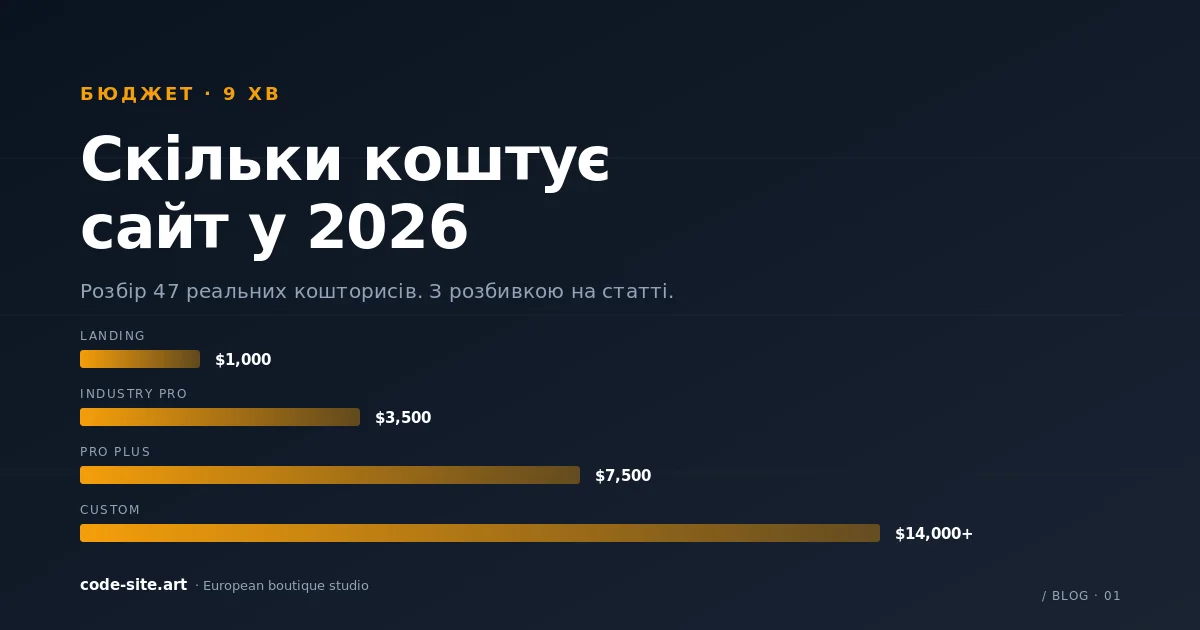
Industry Pro (£3,500) — line by line
This is our most-picked tier. Covers clinics, law firms, accounting offices, renovation companies — anyone who needs an industry-specific site with 2-3 integrations and compliance requirements.
| Line item | Cost | Days |
|---|---|---|
| Copywriting (10 pages + 2 SEO articles) | £400 | 3 |
| Design (Figma, 2 revision rounds) | £700 | 4-5 |
| Frontend (Next.js, responsive, animations) | £1,200 | 6-8 |
| Backend / API / integrations | £600 | 4 |
| Sanity CMS + onboarding | £250 | 2 |
| QA (60-point checklist) | £150 | 1 |
| Launch + domain + analytics | £100 | 0.5 |
| Year of support (reserved) | £100 | — |
| Total | £3,500 | 20-24 |
What's missing from this list — but often appears at competitors — are separate lines for "content strategy," "UX research," "team comms." With us, that's bundled into design and copywriting, not invoiced separately.
What WordPress really costs over 3 years
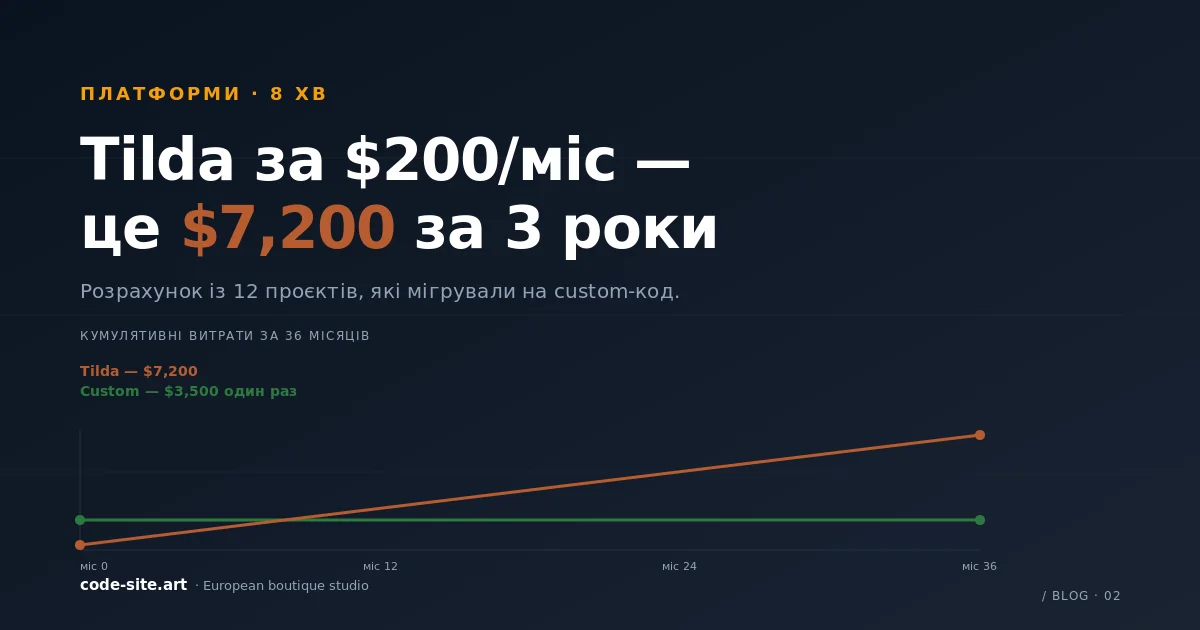
Of our 47 clients, 14 came from a WordPress site that needed a rebuild. In 12 of those 14, total WordPress spend over the previous 2-3 years exceeded the price of a new custom site:
- 18 paid plugins (our average sample) — £300-£800/year
- Developer support (fixes after plugin updates) — £400-£800/year
- Hosting + SSL — £120-£300/year
- Theme + license — £60-£200/year
- Backup + security plugins — £100-£200/year
Total over 3 years: £2,940-£6,300 — not counting the owner's hours spent on "figuring out why the Yoast plugin broke the services page after the last update."
Custom site on Next.js — one payment (£3,500) and £0/mo after launch. We break this down in detail on vs WordPress.
How integrations get counted (the formula)
This is the most common quote-surprise source. Our formula is simple:
- Basic REST integration (form → WhatsApp, form → email): £150
- CRM integration (Bitrix24, AmoCRM, HubSpot, Pipedrive, KeyCRM): £500
- Industry-specific system (Helsi, Clio, MEDoc — UA), or EU equivalents: £500-£1,200 depending on API
- Payment gateway (Stripe, LiqPay, WayForPay): £900
- Booking system (Calendly, YClients, Booksy): £600
- ERP system (Odoo, SAP B1, 1C/BAS): £1,200-£2,500
All of this is in the calculator as separate checkboxes.
Real example: Efedra Clinic, Odesa
Base tier Industry Pro £3,500. What went into the project:
- 12 pages (home, dental services, aesthetic services, doctors, prices, contact, FAQ, blog, promotions, cases, about, booking)
- Integration with Helsi (online booking) — £500
- UA/RU bilingual — +15% on base price (~£525)
- 2 service lines (dental + aesthetics) under one brand — without doubling the design cost
- Compliance with the Ukrainian Ministry of Health (legal-correct pricing and licensing)
Final price: £4,525, timeline 4 weeks. Result after 6 months — 3.2× more inquiries, 4× more organic traffic from Google.
When the price goes over £14,000
If you're planning a project with:
- User accounts with roles (more than 2)
- Complex payment flow (subscriptions, upsells, referrals)
- SaaS logic (multi-tenancy, billing)
- 4+ languages
- 24/7 SLA support
— that's Custom tier from £14,000. Not because "the studio is profiteering," but because that's 8-16 weeks of work for 5-7 people with QA, DevOps, and an architect. That kind of project has different economics.
How to verify your quote is honest
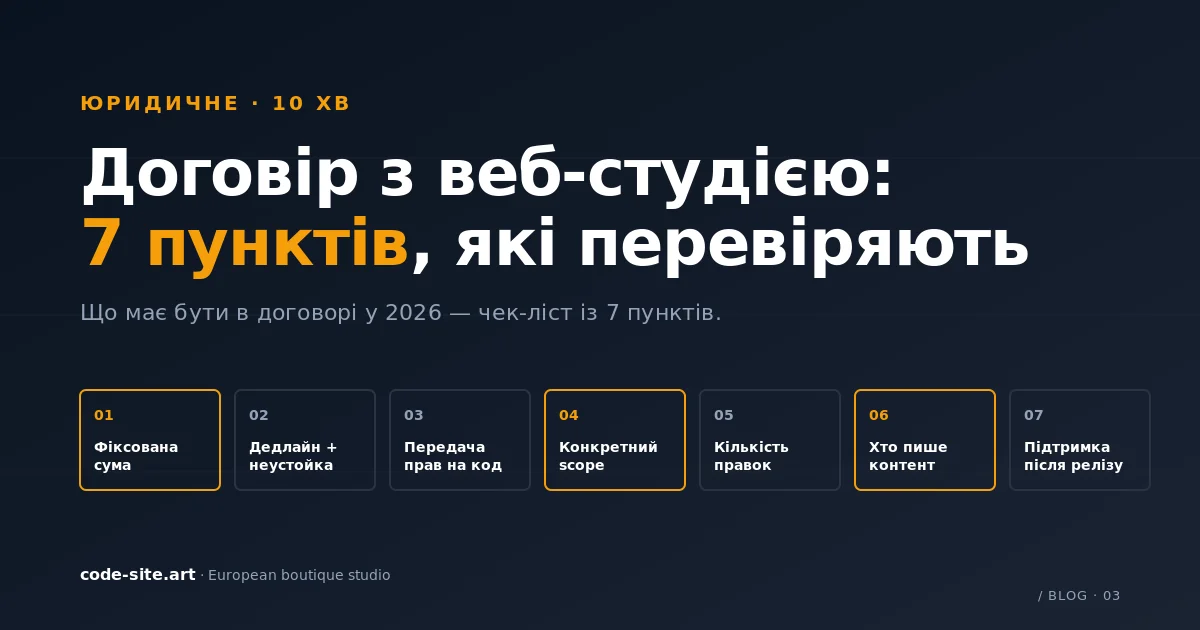
5 questions to ask any studio before signing:
- Is the price fixed in the contract? If "approximate" or "depending on" — it's not a quote, it's marketing.
- Is one year of support in the price? At 80% of studios — no. With us — yes.
- Is the work broken down by line item? If you only see "development £X" — half the work can vanish along the way.
- Is there a rebate clause for missed deadlines? Without a rebate, a deadline is a guideline, not a commitment.
- Who writes the content? That's a separate £200-£2,000. Has to be agreed upfront.
We cover these in detail in Web studio contract: 7 things to check before paying.
Why we quote a fixed price, not "on request"
Two reasons:
- Respect for your time. A business owner shouldn't spend 3 hours on a consult to find out they can't afford a tier.
- Discipline for us. If we can't put a number on the brief within 30 minutes, we don't fully understand the project yet — and that's a risk.
In 47 projects over 3 years, we haven't missed the price range on a single one. Not because we're geniuses — because we've seen 47 similar projects and know what really goes into what.
If your project looks like something in our portfolio'll give you a price range on the 30-min call. If it's non-standard — we'll still give you one, but with a wider band.