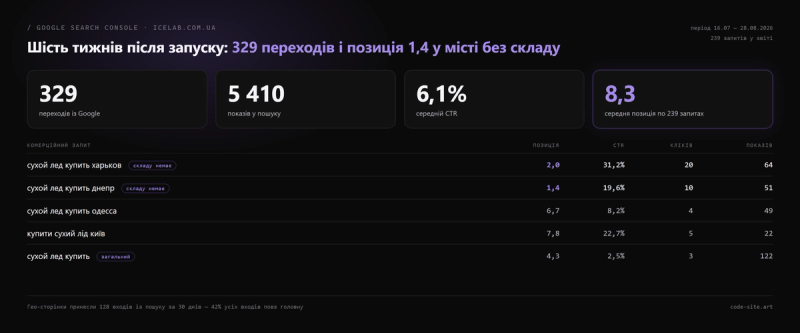
IceLab is a Ukrainian dry ice manufacturer with its own facilities in Kyiv and Lviv. We built an online store that serves both retail and wholesale customers and attracts new audience from Google: 267 clicks, 4.48k impressions in three months and position 2.1 for a commercial query.
Visit site


The site-wide average position is 8.2, which is what a domain starting from zero looks like: most queries still sit on page two. Where buying intent is explicit, the picture changes. On the commercial query “buy dry ice Kharkiv” the site holds position 2.1 with a 26.8% CTR — 4.5× the 6% site average. Someone deliberately searching for dry ice in their city sees IceLab first and clicks.
That is one query, one city, one language. There are eight city pages — Kyiv, Lviv, Dnipro, Odesa, Kharkiv, Zaporizhzhia, Vinnytsia and Poltava — each in a Ukrainian and a Russian version. Google became a standalone client-acquisition channel, not a source of accidental traffic.
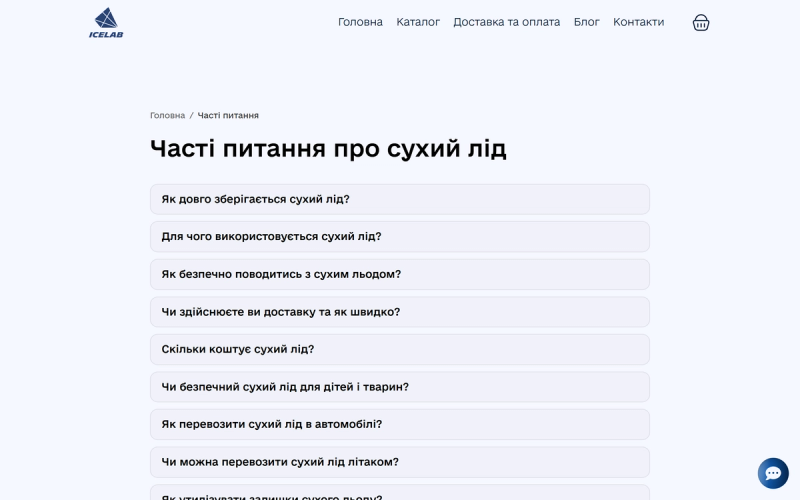
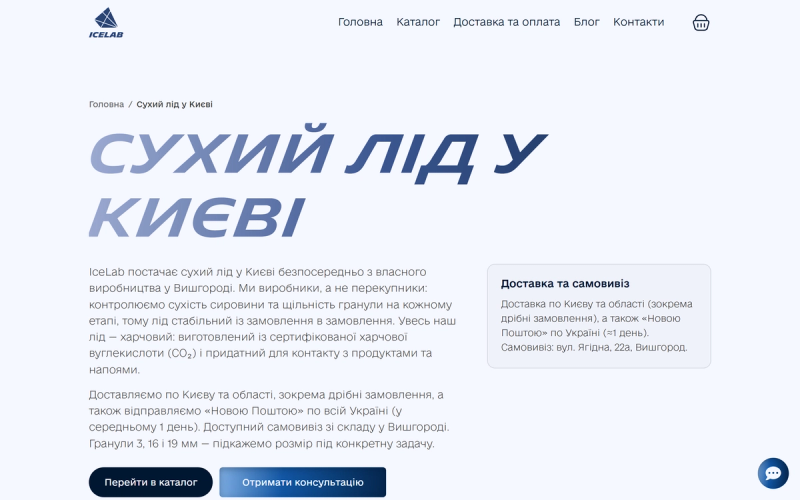
We built SEO directly into the site structure rather than as a separate service after development. Instead of one generic page - a system of landing pages for different query groups: each one answers a specific user need and leads to a product, a consultation or an order.

Dry ice serves very different jobs: food cooling, logistics, medicine, restaurants, special effects and industrial cleaning. A private buyer, a restaurant, a lab and a large production facility have different needs and order volumes. Every user had to quickly find the right product format, understand the difference between granules, see the current price and proceed to an order - while the site showcased the company’s production capacity and stayed comfortable on a phone.

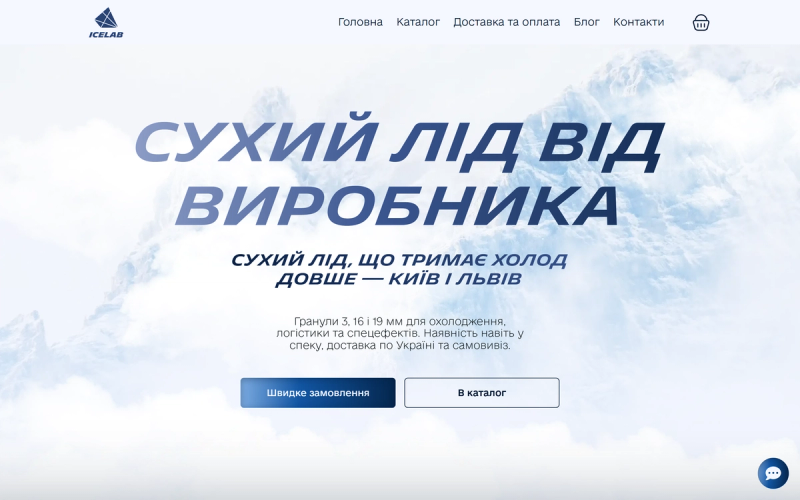
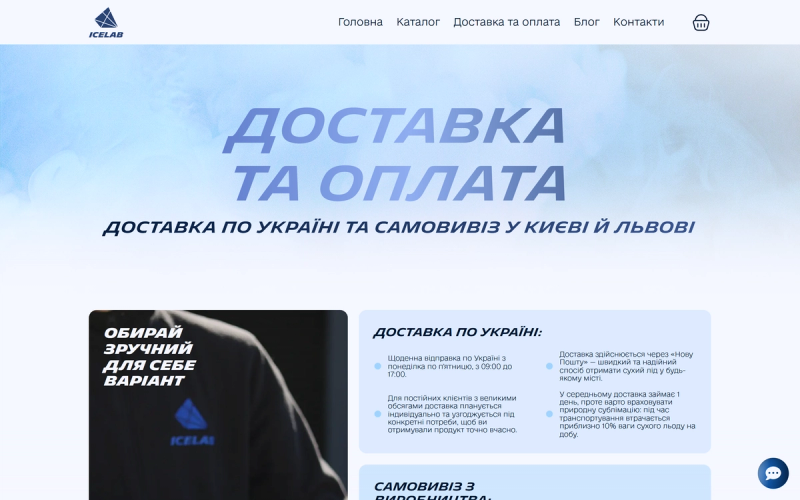
We built an online store that combines product sales, a production showcase and SEO. On the homepage the user immediately sees the core IceLab offer, available ice formats, the starting price and two scenarios: a quick order or a jump into the catalogue.
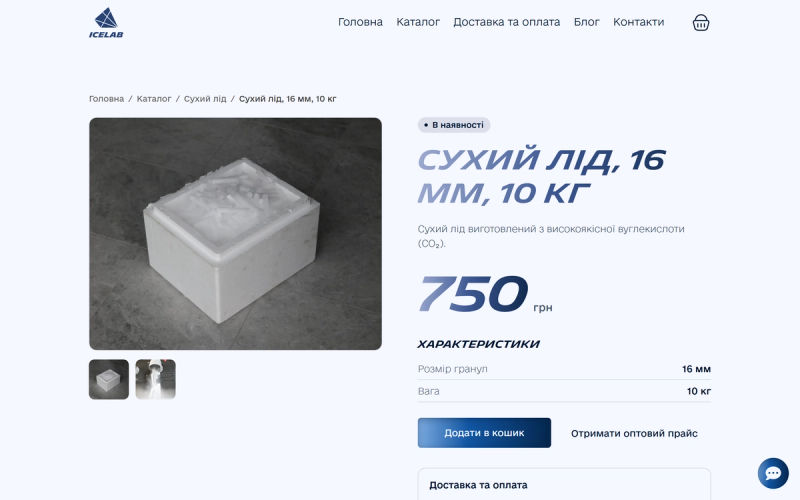
We did not overload the first screen with technical details: the site first helps choose the right direction, then shows specific products, packaging and specs. Cards immediately show availability, granule size, weight, price and an add-to-cart button - no need to message a manager just to learn the basic terms.


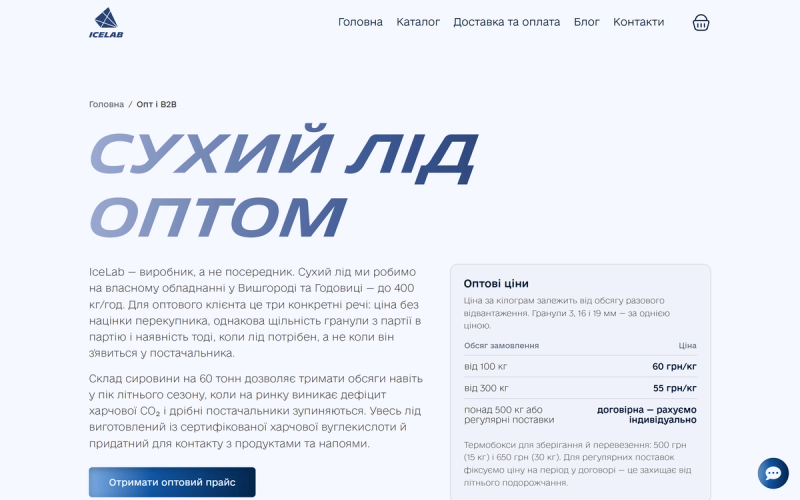
For wholesale clients we created a dedicated landing page with volume-based pricing, regular supply terms, logistics and the advantages of working directly with the manufacturer. Large recurring supplies no longer mix with ordinary retail orders, forming a separate funnel for higher-value B2B enquiries.
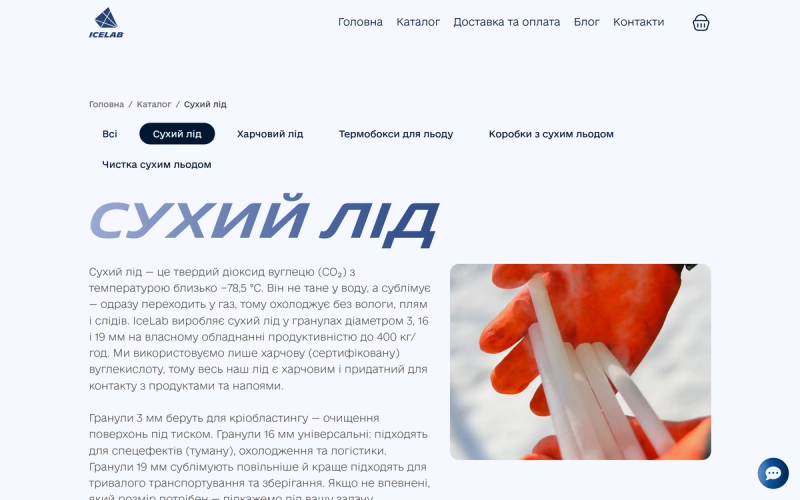
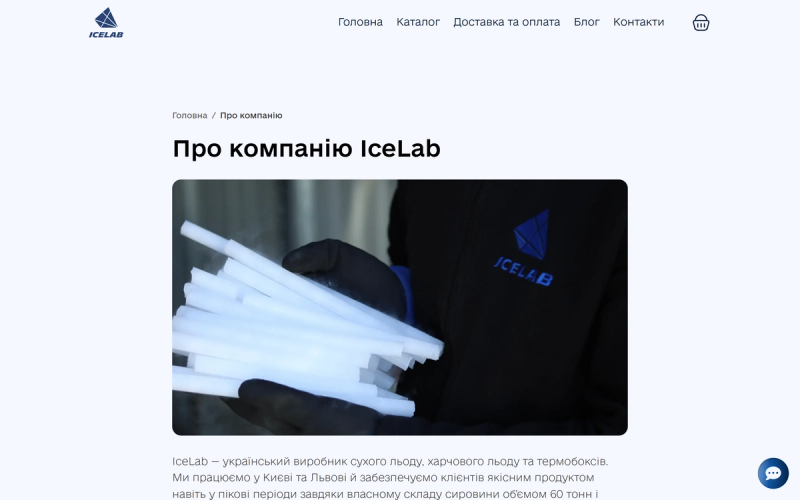
The design is built around the product itself: cold, ice, vapour and industrial production. The light first screen feels like frosty air, deep blue blocks add contrast, and large accent headings, gradients, dry ice photography and translucent cards form the recognizable IceLab style. The visuals carry the character of the product while keeping prices, specs and order buttons the primary elements of every page.


A separate part of the work was the structure for dry ice searches across Ukrainian cities. Each local page gives the user delivery and pickup information, current prices and dry ice use cases for their region. This lets Google surface the most relevant page for a specific local query instead of one generic company page.

IceLab got a full online sales and search acquisition system, not just a showcase site. In three months it earned 4.48k impressions and 267 clicks from Google, position 2.1 for a commercial query and a 6% CTR. The result comes from the right structure: dedicated pages for categories, products, cities, the B2B funnel and specific buyer needs.
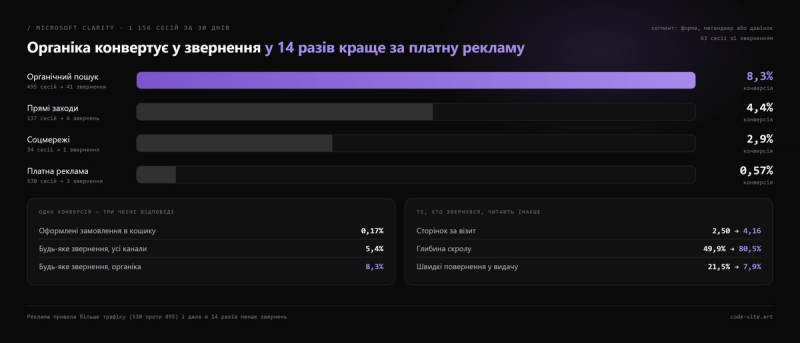
«In the first month after launch — 30+ enquiries from Google and a large B2B contract. The client found us in search on their own, we signed the deal and have already made the first shipment. It was the site's SEO structure that delivered, not ads.»


Need a similar website? E-commerce websites · website development cost


We’ll go through your project: structure, features, timeline, and budget. We’ll tell you straight what’s worth spending on — and what isn’t.